
Frozen shoulder exercises work best when they are gentle, frequent, and done in a pain free range, because a stiff shoulder capsule responds to steady, patient input rather than force. If your shoulder has slowly lost motion over weeks or months, daily range of motion work is the single most useful thing you can do at home.
The stiffness you feel is not a sign that you are weak or out of shape. The joint capsule around your shoulder has thickened and tightened, and it needs consistent, low load movement to loosen.
Here is what to do today, before you read another word:
- Warm the shoulder for 10 minutes with a shower or heating pad before you stretch.
- Move into a gentle stretch, never into sharp pain, and hold for 30 seconds.
- Repeat your stretches 3 to 5 times a day in short sessions instead of one long one.
- Track one motion, such as reaching overhead, so you can see progress week by week.
- Book an evaluation if your motion has not improved after 4 weeks of consistent work.
We see this condition often in our Tulsa clinic, and the pattern is nearly always the same. People wait, hope it passes, then arrive frustrated after losing months of motion.
What Is Frozen Shoulder and Why Does It Happen?
Frozen shoulder is a condition where the capsule surrounding your shoulder joint becomes inflamed, thickened, and tight, which limits both your own motion and motion someone else creates for you. Clinicians also call it adhesive capsulitis.
That last detail matters. With most shoulder problems, someone can move your arm further than you can move it yourself. With a frozen shoulder, the joint stops in both cases.
What Is Actually Happening Inside the Joint

Healthy shoulder capsules are loose and flexible, and synovial fluid keeps everything gliding. In a frozen shoulder, bands of thickened tissue form and the fluid volume drops.
The result is a joint that behaves like a shrunken sleeve. Your muscles are usually fine, but the container they work inside has tightened.
Why It Often Starts Without an Injury
Many people cannot name a moment when it began. According to the American Academy of Orthopaedic Surgeons, the causes are not fully understood, and the condition most commonly affects people between the ages of 40 and 60, occurring in women more often than men.
Other cases follow a clear event. A rotator cuff strain, a fall, a surgery, or several weeks in a sling can all trigger the capsule to stiffen.
How Common Is It
Frozen shoulder is more common than most people expect. A clinical review published through the National Library of Medicine reports that adhesive capsulitis affects roughly 2 to 5 percent of the general population, with a mean age of onset around 55.
What Are the Three Stages of Frozen Shoulder?
Frozen shoulder moves through three predictable stages: freezing, frozen, and thawing. Knowing which stage you are in tells you how aggressive your exercises should be.
This is the piece most people never hear. The right exercise in the wrong stage can set you back weeks.
| Stage | Typical Length | What You Feel | Exercise Focus |
|---|---|---|---|
| Freezing | 6 weeks to 9 months | Pain builds, especially at night, and motion starts to fade | Gentle pain free motion, calm the joint, protect sleep |
| Frozen | 4 to 12 months | Pain eases but stiffness dominates daily tasks | Sustained stretching and loading at end range |
| Thawing | 6 months to 2 years | Motion slowly returns and function improves | Strengthening, overhead work, return to full activity |
Why Stage Matters More Than Effort
In the freezing stage, pushing hard usually increases pain and does not increase motion. The joint is inflamed and reactive.
In the frozen stage, the opposite is true. Gentle work alone will not change a stiff capsule, and you need longer holds with more intent.
Which Frozen Shoulder Exercises Are Safe to Start With?

The safest starting exercises are passive and assisted movements that let gravity or your other arm do the work. These restore motion without asking the painful shoulder to lift anything.
Start with these five. Each takes under a minute.
Pendulum Swings
Lean forward with your good hand on a counter and let your affected arm hang loose. Let the arm swing in small circles, forward and back, then side to side.
Your shoulder muscles should stay relaxed the entire time. Do 30 seconds in each direction.
Assisted External Rotation in a Doorway
Stand in a doorway and bend your affected elbow to 90 degrees, resting your hand on the door frame. Keep the hand still and slowly rotate your body away.
External rotation is usually the first motion lost, so this one deserves your attention. Hold for 30 seconds and repeat 3 times.
Supine Forward Elevation
Lie on your back with your knees bent. Use your good arm to lift the affected arm overhead until you feel a gentle stretch, then hold for 15 seconds.
Lying down removes the muscle guarding you get when standing. Most people find they reach further this way.
Crossover Arm Stretch
Bring one arm across your chest just below your chin, using the other arm to draw it closer. Stop where you feel a stretch rather than pain.
This targets the back of the capsule, which tightens in almost every case. Hold for 30 seconds.
Towel Assisted Internal Rotation
Drape a towel over your good shoulder and grip the bottom end with the affected hand behind your back. Gently pull upward with the top hand.
Internal rotation is what lets you reach a back pocket or fasten a bra. It is worth protecting early.
How Often Should You Do Frozen Shoulder Exercises?
Do your frozen shoulder exercises 3 to 5 times per day in short sessions of 5 to 10 minutes rather than one long daily session. Frequency changes tissue more reliably than intensity.
Think of it like watering a plant. A little every few hours beats a flood once a week.
The 30 Minute Rule
Some soreness after stretching is normal and expected. Pain that lingers more than 30 minutes past your session means you pushed too far.
Scale back the range, not the frequency. Keep showing up.
Use Heat Before, Not After
Warming the joint for 10 minutes before you stretch makes the capsule more pliable. A hot shower works just as well as a heating pad.
Save ice for after a session that flared things up. It calms the joint without undoing your work.
Which Exercises Should You Avoid With a Frozen Shoulder?
Avoid heavy overhead pressing, aggressive end range yanking, and any movement that produces sharp pain lasting beyond the session. These provoke the capsule and increase guarding.
People often try to muscle through, and the shoulder responds by tightening further.
- Overhead barbell or dumbbell pressing while motion is still limited
- Ballistic bouncing at the end of a stretch
- Hanging from a bar to force the joint open
- Heavy lat pulldowns behind the neck
- Sleeping directly on the affected shoulder if it wakes you
What to Do Instead of Pressing
Keep training the rest of your body while your shoulder recovers. Lower body work, core work, and light rowing patterns all stay available.
You will return to overhead work. It just belongs in the thawing stage.
How Long Does Frozen Shoulder Take to Get Better?
Most frozen shoulders improve substantially within one to two years, and the AAOS notes that full recovery may take up to 3 years without surgery. Physical therapy focused on shoulder flexibility is the primary treatment recommendation.
That number sounds discouraging until you see the second half of the data.
What the Outcomes Actually Show
The clinical review from the National Library of Medicine reports that roughly 80 percent of patients regain near normal or normal shoulder function with proper treatment, while about 10 to 20 percent have some residual stiffness. Early intervention lessens both the severity and duration of symptoms.
Translation: the odds are strongly in your favor, and starting sooner shortens the road.
What Speeds Recovery Up
- Starting motion work in the first weeks of symptoms
- Managing blood sugar if you live with diabetes
- Treating an underactive or overactive thyroid
- Sleeping in a position that does not compress the joint
- Hands on manual therapy paired with a home program
Who Is Most at Risk for Frozen Shoulder?
People with diabetes, thyroid conditions, and recent shoulder immobilization carry the highest risk. Age between 40 and 60 and being female also raise the odds.
If you check more than one of those boxes, treat any new shoulder stiffness as urgent rather than minor.
The Diabetes Connection
Frozen shoulder occurs far more often in people with diabetes, and the AAOS notes that this group tends to have greater stiffness that lasts longer before thawing. Improving glucose control alongside therapy can genuinely speed recovery.
We coordinate with your primary care team on this when it applies. The two problems are linked, and treating one helps the other.
After Surgery or a Sling
Any period of holding the shoulder still raises risk. That includes recovery from a fracture, a rotator cuff repair, or even a long stretch of avoiding motion because of pain.
Early gentle movement after injury is one of the most effective preventive steps available.
How Does Physical Therapy Change the Timeline?
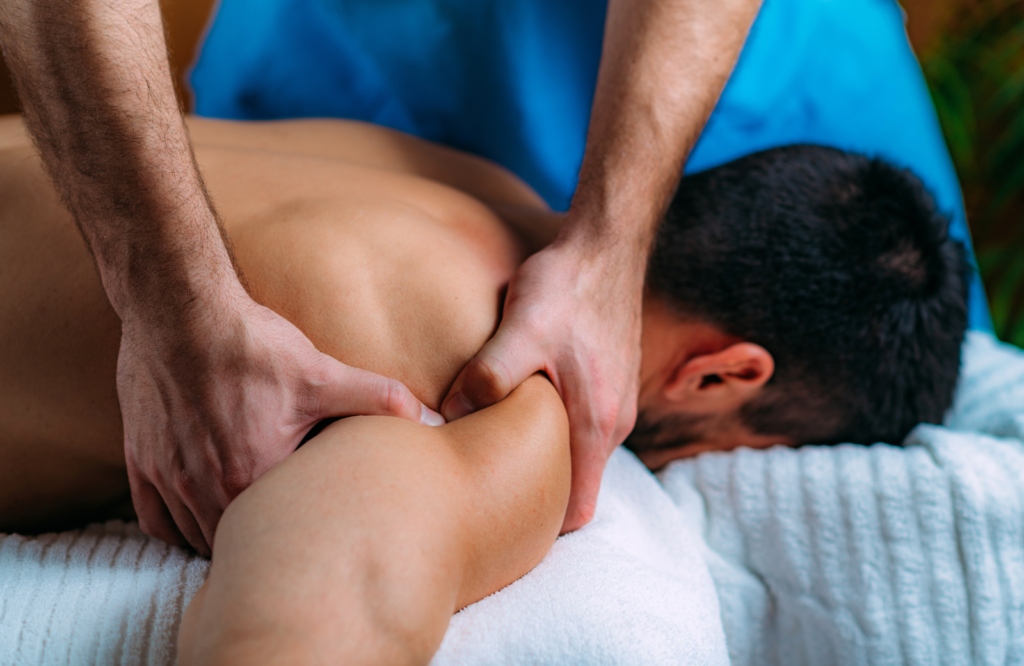
Physical therapy shortens the painful phase, restores motion faster, and protects the strength you would otherwise lose. Home exercises alone often stall, because it is difficult to reach true end range on your own.
We combine three things a home program cannot replicate on its own.
Hands On Joint Mobilization

Skilled manual therapy takes the joint further than you can take it yourself, without triggering the guarding response. This is where the biggest range gains usually appear.
You then hold those gains with your home exercises. The two work together.
Load Progression You Can Trust
Knowing when to add resistance is the hardest judgment call in this condition. Too early and the joint flares, too late and you lose strength.
We adjust week to week based on how your shoulder responds. That is what keeps progress steady.
Protecting Everything Else
A stiff shoulder changes how your neck, upper back, and elbow work. Left alone, those areas develop their own problems.
We watch the whole chain, not just the joint that hurts.
Frequently Asked Questions
Can frozen shoulder heal on its own without exercises?
Frozen shoulder often improves on its own eventually, but recovery takes considerably longer and many people are left with lasting stiffness. Exercises and physical therapy shorten the timeline and improve the final range of motion. Waiting also means living with pain and limited function for months you did not need to lose.
Should frozen shoulder exercises hurt?
You should feel a stretch and mild discomfort, but not sharp pain. A useful rule is that soreness should settle within 30 minutes of finishing. If pain lingers longer or wakes you that night, reduce your range next session rather than stopping altogether.
Is it better to rest or move a frozen shoulder?
Movement is better in almost every case. Rest allows the capsule to tighten further, which is exactly what created the problem. The goal is frequent gentle motion rather than heavy or forceful activity.
How do I sleep with a frozen shoulder?
Sleep on your back or on the unaffected side with a pillow supporting the painful arm in front of you. Placing a pillow under the affected elbow keeps the shoulder from dropping backward, which is a common source of night pain. Applying heat before bed also helps many people fall asleep more easily.
Can frozen shoulder come back after it heals?
Recurrence in the same shoulder is uncommon, though it happens more often when a contributing factor such as diabetes remains untreated. The opposite shoulder is affected in a meaningful share of cases. Keeping both shoulders moving well is a reasonable long term habit.
How soon will I notice progress from frozen shoulder exercises?
Most people notice small changes in comfort within two weeks and measurable range improvements by four to six weeks. Progress tends to arrive in steps rather than a smooth line. Tracking one specific motion each week makes those gains much easier to see.
Getting Your Shoulder Back Without Guessing
A frozen shoulder is stubborn, but it is not permanent. The people who recover fastest are the ones who start early and follow a plan built for the stage they are actually in.
What Care Looks Like With Us
Your first visit is a full assessment of your shoulder, your neck, and how you move through your day. We measure your range so you have real numbers to beat, not just a feeling.
From there you get hands on treatment and a home program that fits your life. Short, repeatable, and specific beats a long list you will never do.
You Do Not Have to Wait It Out
We hear the same sentence constantly: I thought it would go away. Months of lost motion are hard to win back, and they are avoidable.
If reaching a seatbelt, a shelf, or the back of your head has become a problem, that is reason enough to be seen.
Serving Tulsa and the Surrounding Area
We work with active adults and athletes across Tulsa, Broken Arrow, Bixby, and Jenks. You can read more about how we approach this on our Tulsa shoulder pain physiotherapy page.
Every plan is built around what you actually want to get back to, whether that is lifting, throwing, gardening, or sleeping through the night.
Start With a Free Discovery Call
We offer a free discovery call with our team to discuss your goals and best care options, so you can ask questions before committing to anything. It is a conversation, not a sales pitch.
Call us at (918) 265-4688 or request an appointment online. Your shoulder is capable of far more than it is showing you right now.